Pilates & PBT do NOT Count as Cross-Training for Dancers (Here's Why)
 Dr. Chelsea Moehlenbrock
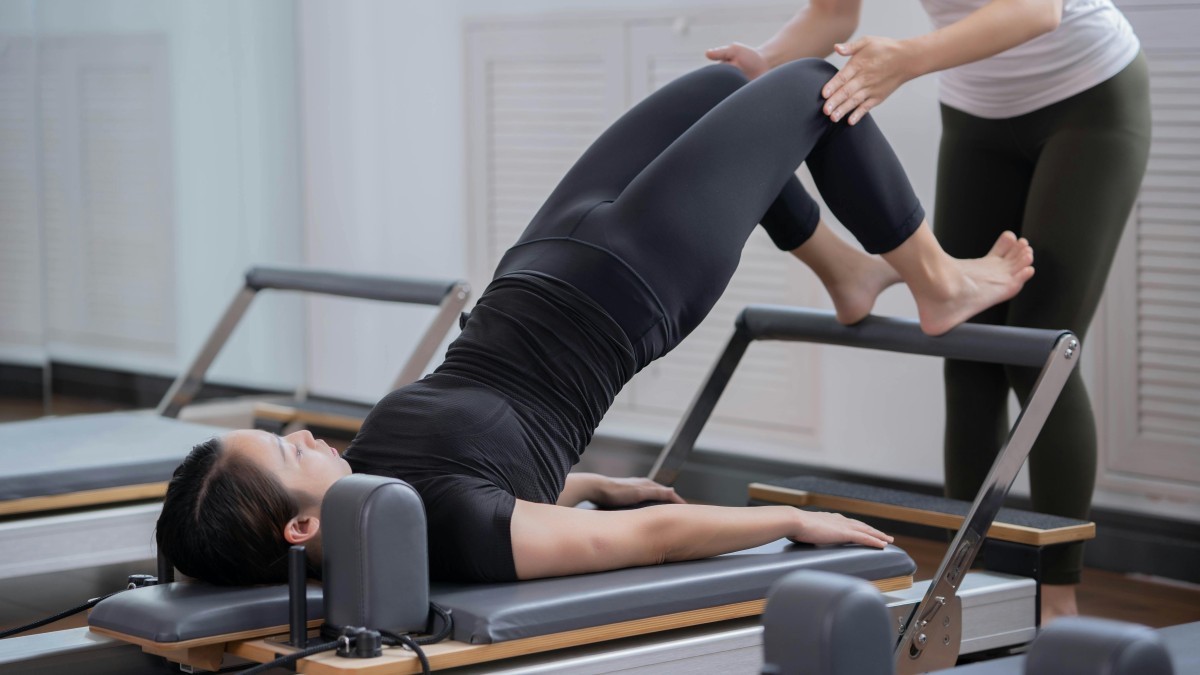
Pilates and PBT (Progressing Ballet Technique) have become staples in a lot of studios. I know teachers who are massive fans of PBT and/or Pilates — and for good reason: when it’s used for the right purpose, it can be great.
But here’s the important distinction that changes how you plan training: Pilates and PBT are not cross-training. They’re dance-specific supplemental training.
That’s not a downgrade. It’s just a more accurate way to describe their purpose.
What is PBT?
PBT is exactly what the name implies: a method designed to improve ballet technique.
It’s an approach that focuses on improving control of movement, awareness of alignment, and uses movements that look like ballet.
In other words: it’s completely dance-specific, and it can be a really effective way to build awareness and reinforce technical patterns.
What is Pilates?
Pilates is a structured movement method that focuses on control, alignment, incorporating breath with movement, and efficient muscle recruitment—especially through the trunk, hips, and shoulder girdle.
For dancers, it often feels familiar because it reinforces many of the same priorities you hear in technique class: length, placement, precision, flow, and stability without gripping.
Depending on the style (mat vs equipment; classical vs modern vs clinical), Pilates can be used to improve body awareness, body control, and coordination.
What PBT and Pilates are NOT:
Pilates and PBT do not cover the full needs of a dancer with regards to cross-training. Why? Because cross-training should address qualities that dance class doesn’t consistently build, such as:
- Aerobic capacity - Most classes rarely keep heart rate elevated long enough, consistently enough, to build a solid aerobic base.
- Impact tolerance - This encompasses strength and resilience against landing forces. Just because a dancer learns good alignment and technique for jumps, does not mean their tendons, joints, and muscles have the resilience for the repeated high forces they are going to experience (have you ever counted how many times a dancer lands from a jump in a performance?!).
- Broader strength development - PBT and Pilates use body weight and light resistance. In order to build actual strength and power, the body needs a heavier stimulus. That means picking up a weight that takes effort to move, not just those 5-10lb dumbbells (plus, this will benefit your bone density long-term as well).
- Agility and speed - Short-burst acceleration, quick deceleration, and rapid changes of direction are needed to make quick choreography look effortless. Developing this basic athleticism outside of dance class makes it much easier to maintain your technique when steps start getting faster.
*If it looks like dance and feels like dance movements, it’s probably supplemental technique work, not cross-training.*
So when should I use Pilates and PBT in my training?
Pre-professional and professional dancers typically have very busy schedules. When balancing dance training between classes, rehearsals, cross-training, and recovery, more is not always better.
Here are some examples of when Pilates and/or PBT would be a good option:
During heavy rehearsal weeks as a lower-impact support
When returning from injury to rebuild control and coordination
When a dancer has specific technique goals that Pilates/PBT can assist with such as alignment awareness and control of movements in ballet-specific positions
As a substitute for (not in addition to) some technique hours, when technique is the priority
As an accessory session alongside strength training (not replacing it)
To clarify this a little: if a dancer is already doing 15-20 hours/week of dance classes/rehearsals, is it actually helpful to add another ballet-specific session such as Pilates or PBT? . . . or would it be smarter to substitute one technique class for PBT or Pilates so the total training load doesn’t just keep climbing?
If you look at other athletes, only part of training time is spent on sport-specific drills and technique (equivalent to technique classes and rehearsals). Another big chunk of time is devoted to strength development, conditioning, recovery, and building capacity so skills hold up under fatigue.
So the big question is: Why do dancers spend such a high proportion of their time on technique, and so little on general strength and athletic development?
That imbalance is one reason dancers can look “strong” in class but still get injured when volume spikes. This is why true cross-training (things that don’t look like dance) is not optional for dancers.
When dancers are specific with their goals, that can help guide them as to what they need more focus on in their training program:
- “I need better pelvic control and alignment awareness.” → Pilates/PBT may be a great fit.
- “I want higher jumps and better landing control.” → you’ll likely need progressive strength + power work.
- “I keep getting calf/Achilles flare-ups during heavy rehearsal schedules.” → you likely need calf strength/endurance capacity + impact progression + load management.
- “I’m exhausted halfway through rehearsal.” → aerobic/anaerobic conditioning may be the missing piece.
Bottom line:
Pilates and PBT are excellent tools for technique support. But they’re not cross-training, and they shouldn’t be treated like a complete conditioning plan.
If you want performance and longevity, the goal is a balanced system:
- Dance technique (skill) - Developing a solid foundation is more important than learning all the fancy tricks.
- Strength/impact tolerance/conditioning (cross-training) - This is required for lasting injury resilience and developing overall athleticism.
- Pilates/PBT (support + control) - Complements dance technique as needed for working towards specific goals in a dancer’s technique.
- Recovery (where adaptation actually happens) - Rest is required for the body to build and adapt to the stress that we put on it. This is why adding more to the schedule can end up being counter-productive in the long run and lead to injuries.
I have read and agree to the terms & conditions. We will not spam you.