Hip Flexor Tightness in Dancers
 Dr. Chelsea Moehlenbrock
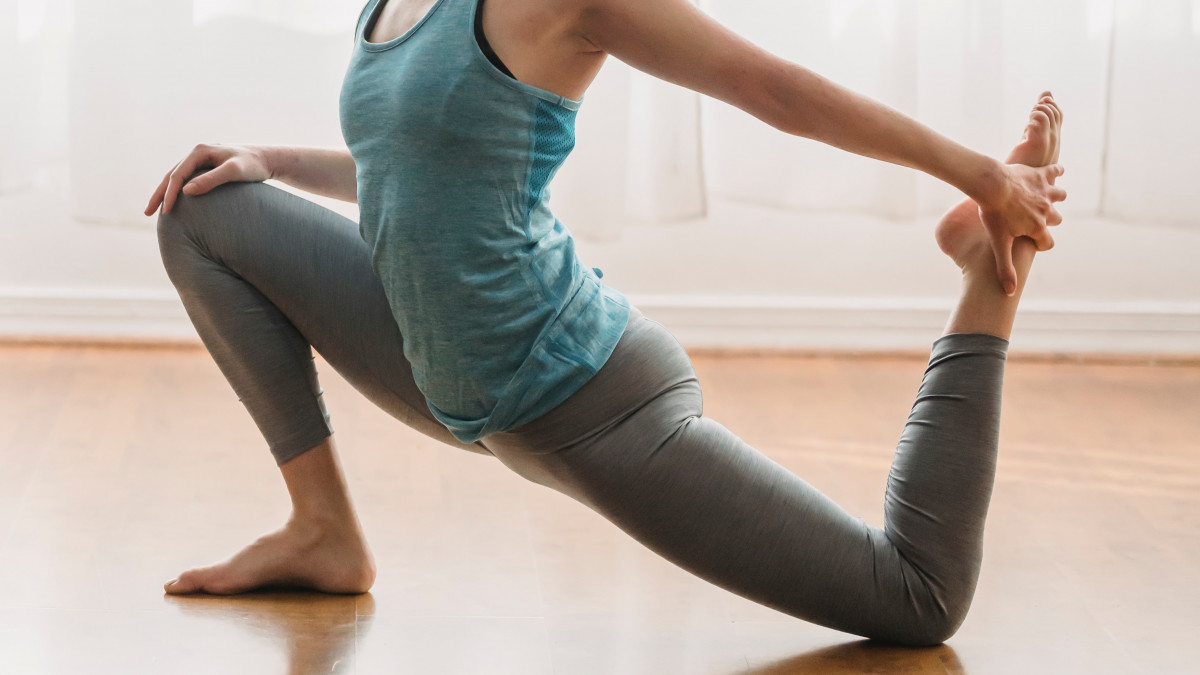
Dancers’ hip flexors get blamed for a chronic and widespread issue. I have lost count of how many times I hear dancers say their hip flexors are always tight. And I used to be one of them!
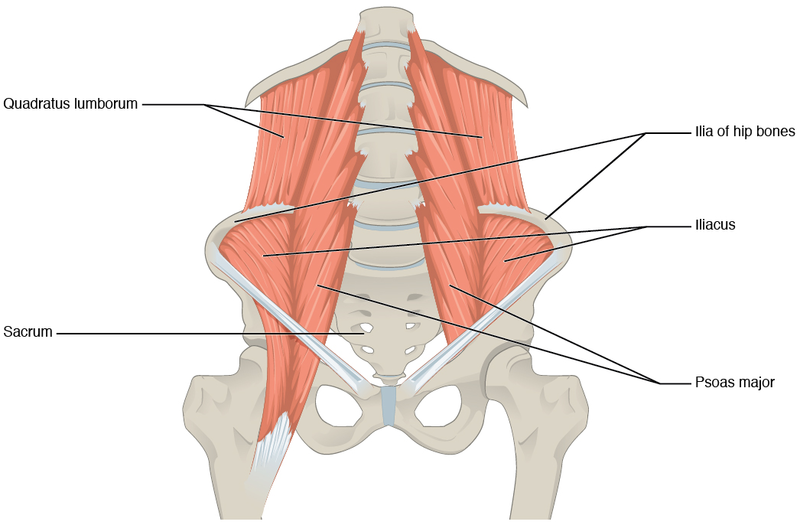
The hip flexors include two large muscles in our lower abdomen: the psoas major (attaches to the front part of the lower spine) and the iliacus (attaches to the inside of the pelvis). These merge into one tendon in the front of the hip called the iliopsoas tendon which attaches on the inside of the femur (the upper leg bone). Their main function is to lift the leg or pull the torso towards the legs if the legs are fixed in a position.
Many dancers tell me that their hip flexors are always tight and that they are constantly needing to stretch them.
Dancers, if you are not getting any relief from constant hip flexor stretching, maybe it’s time to try a new approach…
Have you ever done any strengthening exercises for the hip flexors?
Most of the time, dancers are neglecting to do any strengthening work for the hip flexors because they think 1) they don’t need it or 2) they are already too tight and think strengthening will be counterproductive. As a physical therapist, when I am assessing a dancer’s hip mobility, there are certain tests that I use to show the actual length of the hip flexor. I very rarely find a dancer that actually has a shortened hip flexor.
Let’s look a little deeper into this. If a muscle is never strengthened or is not trained, then when we put it through a demanding set of tasks, it’s going to fatigue quickly. This sensation of fatigue can feel similar to what we interpret as tightness. Our brains are perceiving these fatigue signals as tightness, leading us to want to stretch it out constantly.
Tightness is more often a perception and does not automatically mean that the tissue is shortened. If you constantly have this feeling of tightness, it could be related to a need for more strength around a joint. The muscle that is feeling tight is fatigued from having to provide more stability and is potentially compensating for another muscle or muscle group that isn’t providing enough support.
So, considering the hip flexors specifically, when is it that your hip flexors feel “tight”? After adagio? After quick jumps*? After grand battement? All of those activities can be very demanding on the hip flexors. So…maybe the hip flexors aren’t tight; they are just weak. Hence, the uncomfortable feeling you get in the front of the hips. So why not take a different approach? If stretching hasn’t been making a noticeable difference, then try something else!
Now I will admit that I’m biased towards strengthening exercises that take joints through their full range of motion, particularly for dancers. This is so that they train their bodies to be able to have full control through their full range of motion. However, two of these exercise examples below focus more on the end range control, meaning they don’t move through the full available motion of the hip. These specifically target the ability to get the leg into higher extension. As you get stronger, you will notice that you are able to move through a fuller range of motion (meaning your leg is able to go higher in développé!). Try these out:
Long Lever Sitting Hip Flexion: Sit on the floor with one leg straight out in front of you and the other knee bent with your foot flat on the floor. If you have access to a yoga block, place that on the outside of the leg you are going to be working. Support your torso with your hands on the floor or by placing them around the bent knee. Sit up tall through the spine. Lift the extended leg off the floor while keeping that knee straight. Lift that leg up and over the yoga block (if you don't have a yoga block, you can choose to hold the hover for a count of five).
Tall Kneeling Lift Off: Start facing a wall and kneel on one knee with the other foot in front of you. Place your hands on the wall. Try to have the pelvis in a neutral position. Lift the front leg off the ground and hold for five seconds.
Hip Flexor Eccentric Drops: This can be done with a kettlebell or a band. Lie on your back on a raised surface such as a weight bench or a bed. Have a kettlebell on one foot or a band around your foot and anchored either under the bench or bed or in a door frame towards your feet. Start with your legs bent into a table top position (90 degrees of the hips and knees). Slowly lower the leg with the weight or band on it while keeping the knee bent. Let the leg go as far down as it will go. This will allow some movement into the end range extension of the hip (meaning the leg is behind you).
If you’re interested in learning more about ways to improve hip flexor strength and hip stability to improve your jumps, turns, and développé height in your dancing, please email me at chelsea@kinetic-wellness.com and we can get you scheduled for a free consultation to discuss performance training programs for dancers.
*When it comes to jumping, the hip flexors can assist in pulling the body back down towards the feet faster during the plie. This enables the dancer to then rebound back up into the air more quickly and perform faster petit allegro or grande allegro.
While we’re on the topic of the psoas:
If you look at the anatomy of the human body and where the psoas is located, it’s impossible to be able to palpate it without completely squishing important organs that lie in front of it. The psoas is a very deep muscle that’s hidden behind our internal organs from the front and shielded by the spine and multiple layers of other muscles from the back. There is so much connective tissue inside our abdomen supporting our organs, that it’s not possible to simply move the organs out of the way to get to the psoas. So those devices that claim to “release” your psoas when you lie on them as they dig into your abdomen…all they are really doing is compressing your colon and if you’re not being pinpoint accurate on your line towards the psoas, then you’ll also potentially compress your small intestine, ovary, or appendix. Why would you want to do that?! Anyways, I’ll get off my soapbox…but if you’re interested in seeing more of the anatomy, this video provides some very good visuals.
I have read and agree to the terms & conditions. We will not spam you.